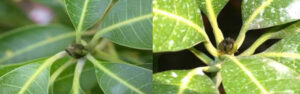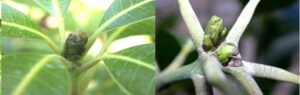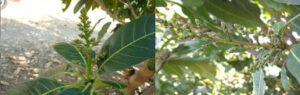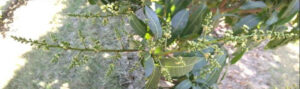
• Flower Development
  • Flowering & Fruit Set
  • Fruit Developing
  • Harvesting
  • Post Harvest

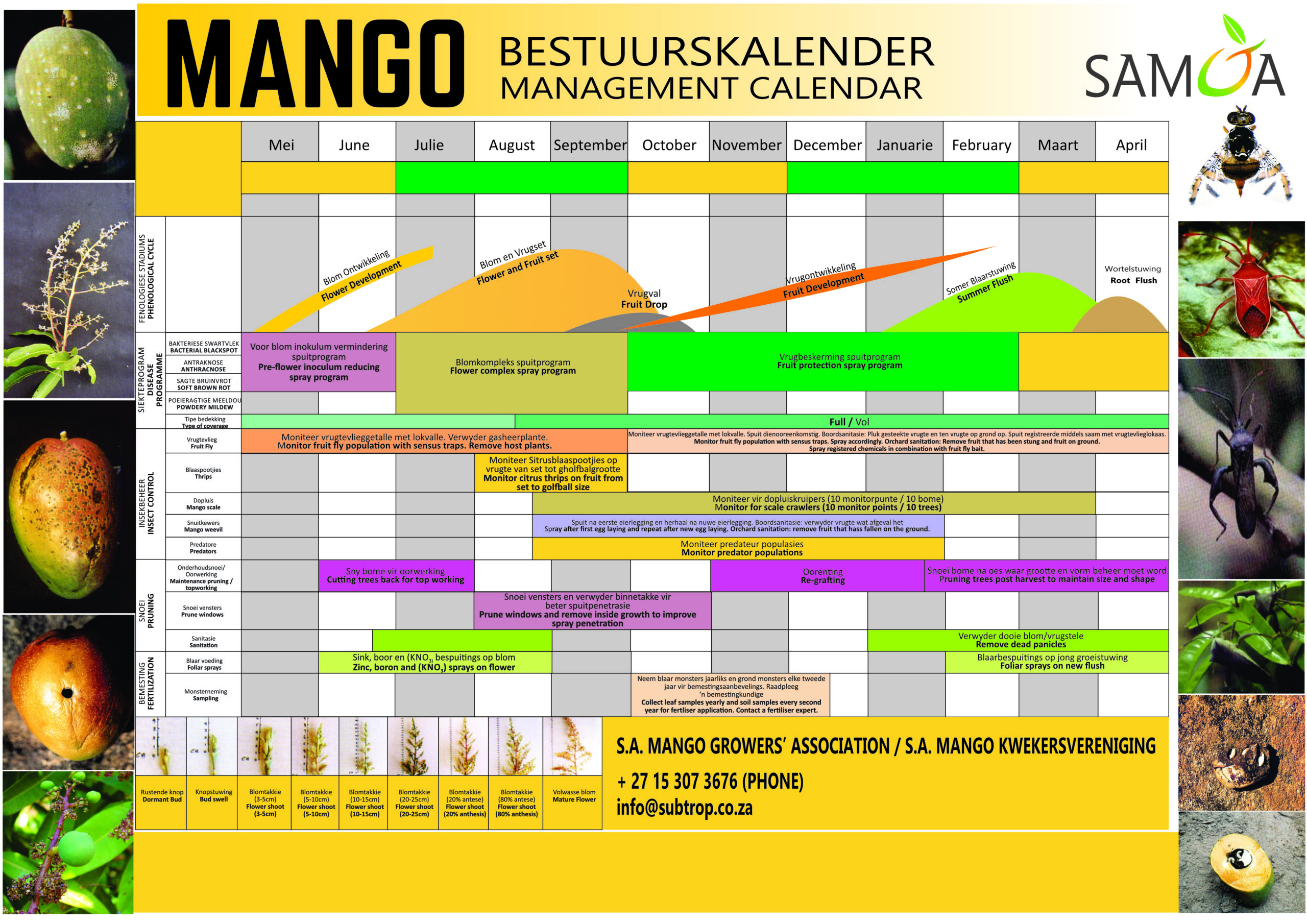
The Management Calendar is based on Tree Phenology stages.  Not all cultivars are the same and the Phenology stages to vary.  The Management Calendar is to be used a basis to plan your orchard management.

It is therefor important to track your orchard phenology by block, cultivar, rootstock, season and yield.

Please download the following page and use it to track your tree phenology stages.

Management Programme

Flower Development

This phenological cycle takes place between the months of May and June, normally weeks 18 to 26. Disease Control Programme It is important to do a medium spray program, known as Pre-flower inoculum reducing spray program, for the following diseases during May and June:
  • Bacterial Blackspot
  • Anthracnose
  • Soft Brown Rot
Insect Control Programme
  • Monitor fruit fly population with sensus traps.  Remove host plants.
Pruning Programme Maintenance pruning and top working:
  • Cutting trees back for top working should be done in June
Sanitation in the orchard:
  • During the last week of June it is best to start with removing malformed flowers
Fertilization
  • Apply Zinc, Boron and Potassium Nitrate (KNO3) Sprays in the month of June

Flowering & Fruit Set

This phenological cycle takes place between the months of July to September, normally weeks 27 to 39.

Disease Control Programme
Continue with a medium flower complex spray program until mid of August, then from mid of August until end of September it is recommend to start with a flower complex spray program for the following diseases:
  • Bacterial Blackspot
  • Anthracnose
  • Soft Brown Rot
  • Powdery Mildew
Insect Control Programme
  • Monitor fruit fly population with sensus traps.  Remove host plants.
  • Monitor citrus thrips on fruit from set to golf ball size from August to September.
  • Mango Scale monitoring should start from September.  Use 10 monitor points per 10 trees.
  • Spraying for Mango Weevil eggs starting in September and should be repeated after new egg laying has been noticed.
  • Monitoring for predator populations starts in September.
Pruning Programme Maintenance pruning and top working:
  •  Continue cutting trees back for top working until end of July.
  • Pruning of windows and removing inside growth to improve spray penetration starts from August and continues in September.
Sanitation in the orchard:
  • Continue removing malformed flowers until end of August.
  • Remove fruit that has fallen on the ground from end of August continuing into September.
Fertilization
  • Continue applying  Zinc, Boron and Potassium Nitrate (KNO3) Sprays until end of August.

Fruit Development

This phenological cycle takes place between the months of October and November, normally between weeks 40 to 48.

Disease Control Programme
Start with a Full Fruit Protection Spray Programme for the following diseases:
  • Bacterial Blackspot
  • Anthracnose
  • Soft Brown Rot
Insect Control Programme
  • Monitor fruit fly population with sensus traps. Spray registered chemicals in combination with fruit fly bait.
  • Monitor for scale crawlers (10 monitors / 10 trees).
  • Spray for mango weevil eggs.
  • Monitor predator populations.
Pruning Programme Maintenance pruning and top working:
  • Window pruning can still be done in October.
  • Re-grafting should start in November
Sanitation in the orchard:
  • Remove fruit that has fallen on the ground from end of August continuing into September.
  • Remove fruit that has been stung by fruit flies and fruit on ground.
Fertilization
  • Sampling of leaf can be done in November.  It is recommend that leaf sampling should be done on a yearly basis.
  • Sampling of soil can be done in November for fertiliser application.  It is recommend to take soil samples every two years.

Harvesting

This phenological cycle takes place between the months of December to January, normally between week 49  to  week 9 of the following year.

Disease Control Programme
Continue with a Full Fruit Protection Spray Programme for the following diseases:
  • Bacterial Blackspot
  • Anthracnose
  • Soft Brown Rot
Insect Control Programme
  • Monitor fruit fly population with sensus traps and spray registered chemicals in combination with fruit fly bait.
  • Monitor for scale crawlers (10 monitors / 10 trees).
  • Spray for mango weevil eggs until end of January.
  • Monitor predator populations until end of January.
Pruning Programme Maintenance pruning and top working:
  • Re-grafting to continue until the second last week of January.
  • Pruning of trees post harvest to start in die last week of January.
Sanitation in the orchard:
  • Continue to remove fallen fruit from the ground.
  • Remove fruit that has been stung by fruit flies and fruit on ground.
  • Remove dead panicles.
Fertilization
  • Sampling of leaf can be done until mid December.  It is recommend that leaf sampling should be done on a yearly basis.
  • Sampling of soil can be done until mid December for fertiliser application.  It is recommend to take soil samples every two years.
  • Start with Foliar Sprays in February to control new flush.

Post Harvest

This phenological cycle takes place between the months of March and April, normally between week 10 – 17.


Disease Control Programme

Remove dead wood and flower panicles and protect new flush again infection.


Insect Control Programme

  • Monitor fruit fly population with sensus traps and spray registered chemicals in combination with fruit fly bait.
  • Monitor for scale crawlers (10 monitors / 10 trees) until end of March.

Pruning Programme

Maintenance pruning and top working:

  • Pruning of trees post harvest ton continue until end of April.

Sanitation in the orchard:

  • Continue to remove fallen fruit from the ground.
  • Remove fruit that has been stung by fruit flies and fruit on ground.
  • Remove dead panicles.

Fertilization

  • Sampling of leaf can be done until mid December.  It is recommend that leaf sampling should be done on a yearly basis.
  • Sampling of soil can be done until mid December for fertiliser application.  It is recommend to take soil samples every two years.
  • Start with Foliar Sprays in February to control new flush.
 
Phenological Cycle
May and June
week 18 to 26
 
Pollination & Bee Management
Essential spraying during flowering should be scheduled at times of least bee activity such as dusk or dawn.
Plant cover crops to ensure enough forage. Download “COVER CROPS” to know which plants to plant during winter months.
 
Disease Spray – Program
 It is important to do a medium spray program, known as Pre-flower inoculum reducing spray program, for the following diseases during May and June:
  • Anthracnose
  • Bacterial Black Spot
  • Soft Brown Rot
Disease Spray Program Disease and Management
 
Insect Control Program
Monitor fruit fly population with sensus traps.  Remove host plants
 
Pruning Program
Maintenance pruning and top working:
  • Cutting trees back for top working should be done in June
 
Sanitation
During the last week of June it is best to start with removing malformed flowers
 
Fertilization
Apply Zinc, Boron and Potassium Nitrate (KNO3) sprays in the month of June
 
Stage A: Budding
Stage B: Bud well
Stage C: Bud break
Stage D: Elongation / Candle
Stage E: 20% flower
Stage F: 20-50% flower
Stage G: 60-80% flower
Stage H: Full Flower