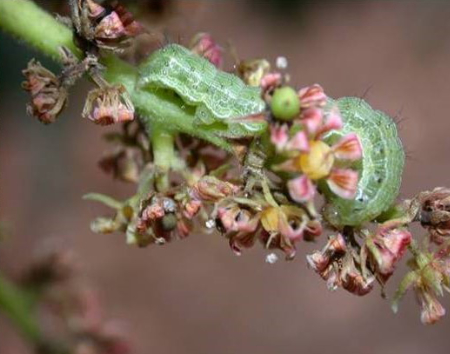
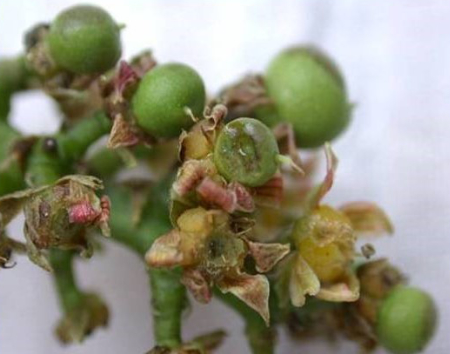
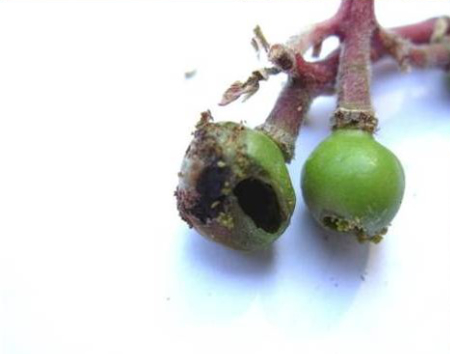
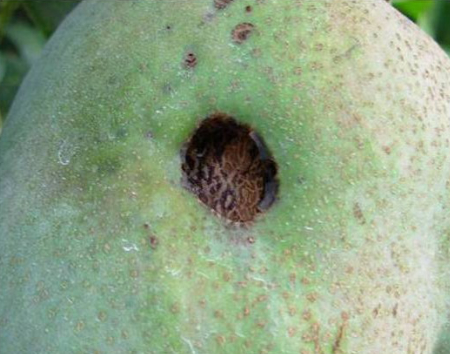
The African bollworm is one of the most cosmopolitan insect pests, with their larvae feeding on a wide range of host plants. The larvae feed on the flowers and fruit of mangoes, but infestations are rarely high enough to cause economic damage. A distinctive characteristic of the larvae of the African ballworm is the pale stripe along each side of the body. When the larvae are ready to pupate, they fall to the ground. Larvae feed on young leaves, flowers and young fruit. The fruit normally outgrows initial damage, but as the larvae grows, fruit damage becomes more severe
Bark Borer
The bark borer feed under the bark and bore into the living wood. Visible symptoms include single branches dying off at first and then spreading to the rest of the tree, as well as small lesions on the main stem and branches with fine sawdust begin excreted from the holes.
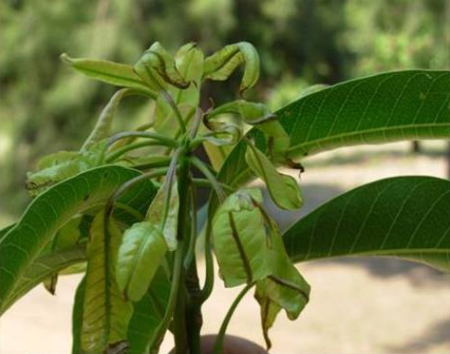
Mango bud mite is very small (0.17mm long), white, cigar shaped and has four legs. Occurs mainly during flowering and growth flushes population peaks. The mites can be found in the young folded leaves of the terminal buds. Research shows that the mite is responsible for flower and vegetative malformation.
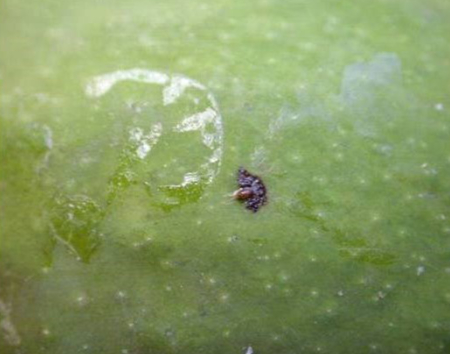
Damage to mangoes can be caused by both the nymphal and the adult stages. Affected mangoes can be distinguished by a soft, watery spot on one or more parts of the fruit surface. The spot later darkens and dents occur in the peel.
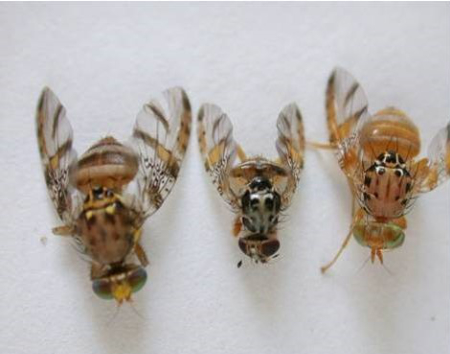
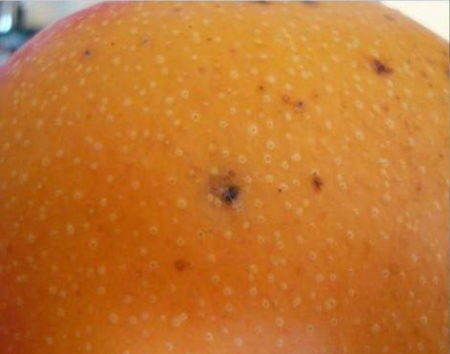
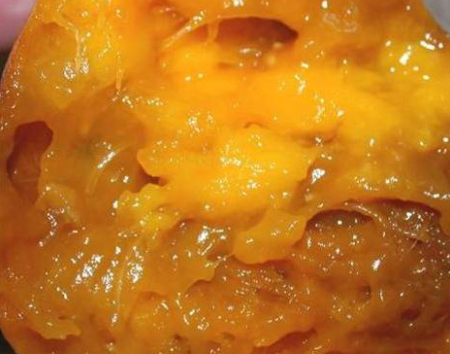
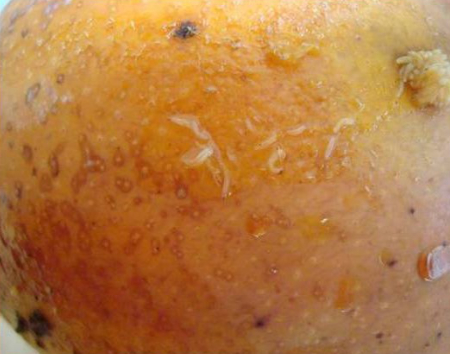
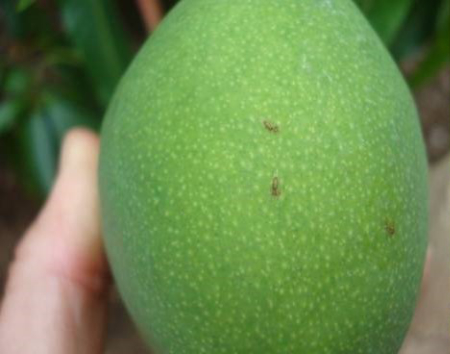
Fruit flies have a cosmopolitan (world-wide) distribution, are polyphagous and cause considerable damage in crops. Fruit flies can damage mango fruit through oviposition scarring, larval feeding, and consumption and decomposition of plant tissue by invading secondary insects and micro-organisms. Small banana-shaped eggs are laid in batches beneath the skin of mature or ripe fruit. The eggs miniscule and, and although the oviposition site is usually indicated by a puncture wound, the damage cannot easily be identified in the pack house, with onfested fruit being marketed.
The effects of mango gall flies are mostly seen on leaves with wart like galls. Adult females lay their eggs on the leaf surfaces and once the eggs hatch they bores into the leaf tissue resulting in the formation of small wart-like galls on the leaves.
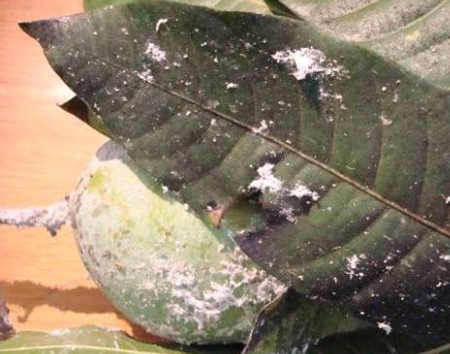
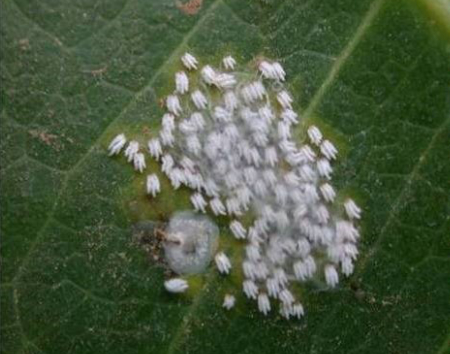
There are two types of scale – armoured (Family: Diaspididae) and soft bodied scales (Family: Coccidae). Adult females of the armoured scale produces a waxy secretion to form a protective cover resembling a plate of armour. They are oyster- or circular-shaped with arcs of wax pivoting around a central point or nipple. The protective cover is not an integral part of the body, while the waxy secretion of soft scales is an integral, inseparable part of the body. Mealybug females are oval with segmented bodies and well-developed legs. The nymphs look similar to the female.
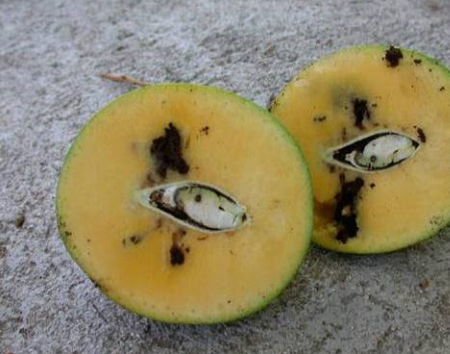
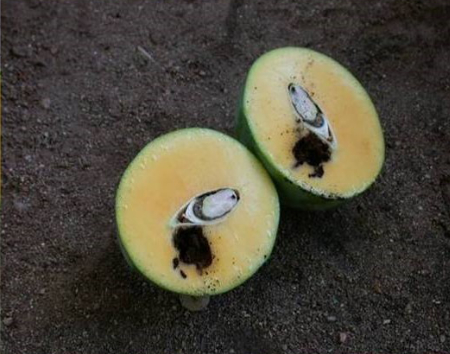
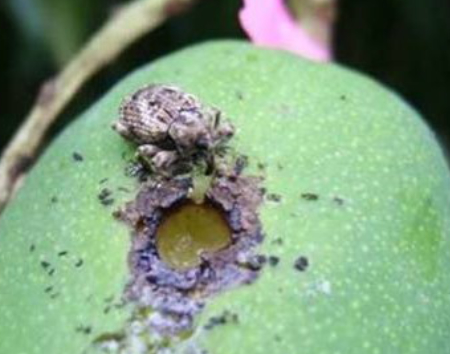
Mango seed weevils (MSW) are herbivorous beetles with biting-chewing mouthparts. Adult weevils feed mainly on young leaves but will also feed on fruit. The MSW is monophageous, feeding only on mango. The fact that the MSW complete its whole life cycle within the mango seed is of greater importance since this result in the MSW seen as a phytosanitary pest. Adult weevils are nocturnal and have well developed wings but the crawl along the branches where they are well camouflaged. Only a single generation is produced per season.
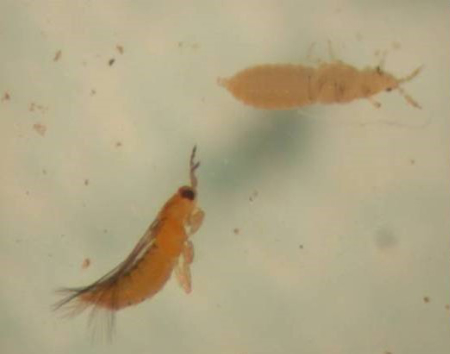
Thrips feed by scraping the outer epidermis tissue away. Feeding occurs mainly on young, actively growing plant parts, early in the season. On young leaves, feeding results in leaf curling, on older leaves in chlorotic or necrotic lesions on the underside. Results in retarded growth (reduction in photosynthesis), but heavy infestations can lead to defoliation. Feeding damage on the fruit is usually superficial (chlorophyll extracted from outer epidermis, but fruit quality can be influenced by severe attack. Feeding starts near the fruit stalk or where fruit touch, but may spread.