
Orchard Management
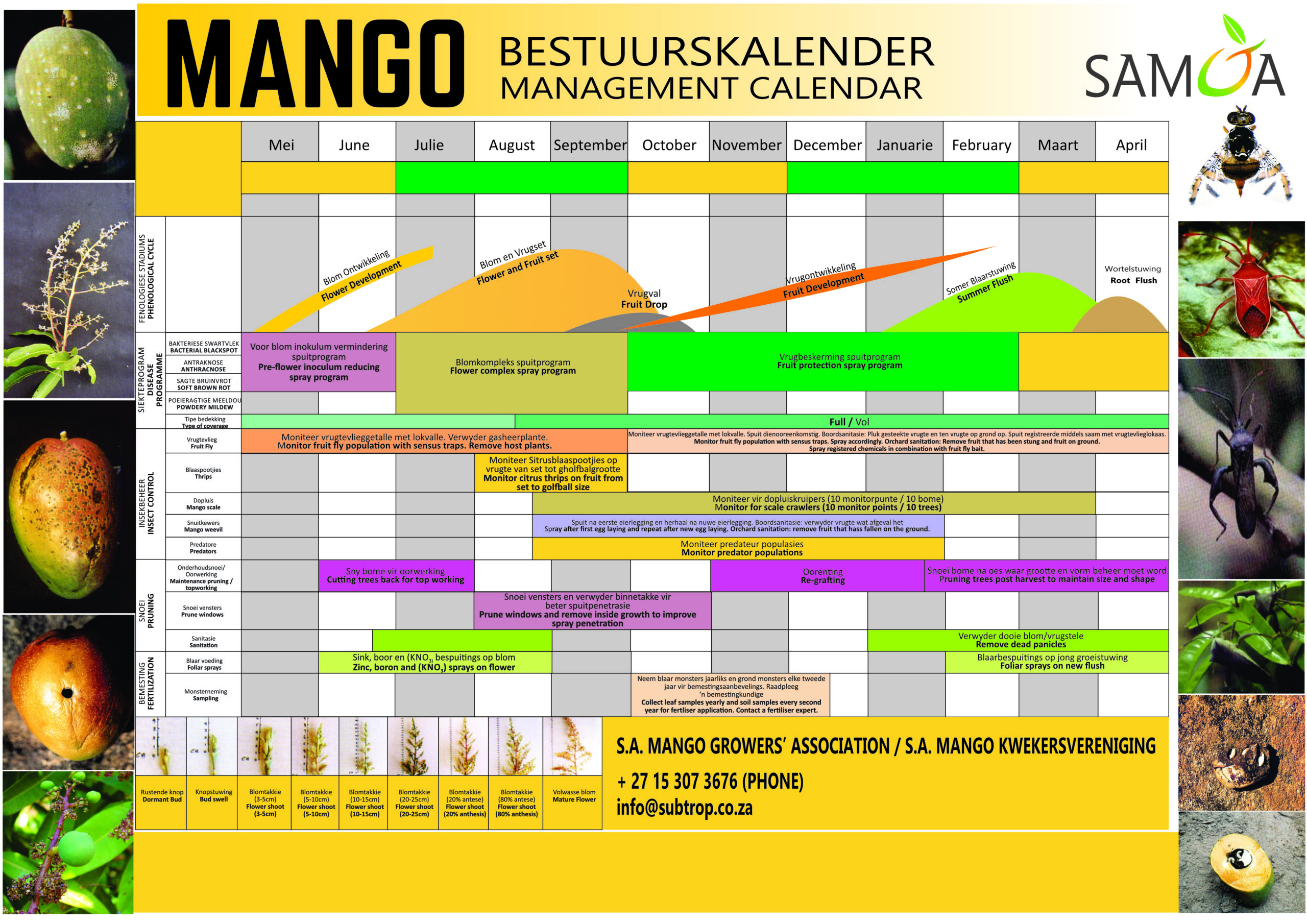
“The management calendar is based on tree phenological stages. Not all cultivars are the same and the timing of their phenological stages varies. The management calendar is to be used as a basis to plan your orchard management.”
It is therefore important to track your orchard phenology by block, cultivar, rootstock, season and yield.
The article below contains a form to assist you to track the phenological stages in your orchards:
Phenological Cycle
| Pollination & Bee Management |
|---|
| Essential spraying during flowering should be scheduled at times of least bee activity such as dusk or dawn. |
| Plant cover crops to ensure enough forage. Download “COVER CROPS” to know which plants to plant during winter months. |
| Disease Spray – Program |
|---|
| It is important to do a medium spray program, known as Pre-flower inoculum reducing spray program, for the following diseases during May and June: |
|
| Insect Control Program |
|---|
| Monitor fruit fly population with sensus traps. Remove host plants |
| Pruning Program |
|---|
| Maintenance pruning and top working: |
|
| Sanitation |
|---|
| During the last week of June it is best to start with removing malformed flowers |
| Fertilization |
|---|
| Apply Zinc, Boron and Potassium Nitrate (KNO3) sprays in the month of June |
| Pollination & Bee Management |
|---|
| Essential spraying during flowering should be scheduled at times of least bee activity such as dusk or dawn. |
Plant cover crops to ensure enough forage. Plants should have nectar and pollen of good quality and quantity. Recommend cover crops that would yield nectar and pollen:
Download “COVER CROPS” to know which plants to plant during summer months. |
| Disease Spray – Program |
|---|
| Continue with a medium flower complex spray program until mid of August, then from mid of August until end of September it is recommend to start with a flower complex spray program for the following diseases: |
|
| Insect Control Program |
|---|
|
| Pruning Program |
|---|
| Maintenance pruning and top working: |
|
| Sanitation |
|---|
|
| Fertilization |
|---|
| Continue applying Zinc, Boron and Potassium Nitrate (KNO3) Sprays until end of August. |
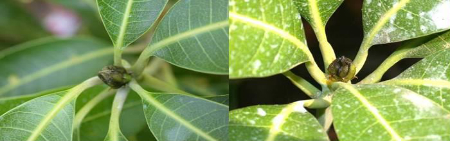
| Stage A: Budding |
|---|
 |
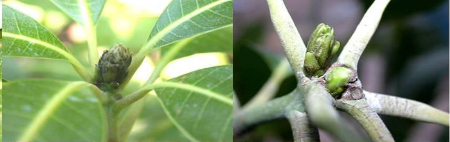
| Stage B: Bud well |
 |
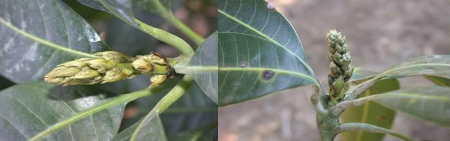
| Stage C: Bud break |
 |
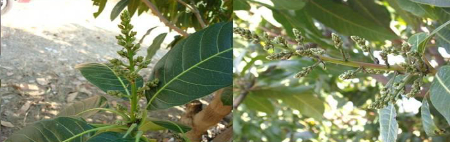
| Stage D: Elongation / Candle |
 |
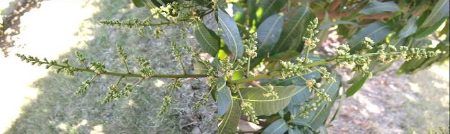
| Stage E: 20% flower |
 |
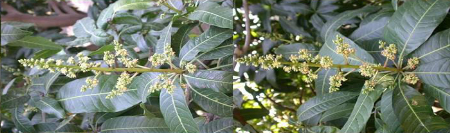
| Stage F: 20-50% flower |
 |
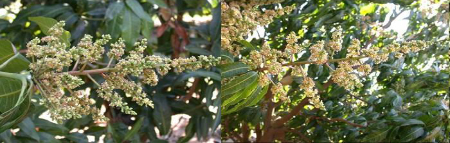
| Stage G: 60-80% flower |
 |
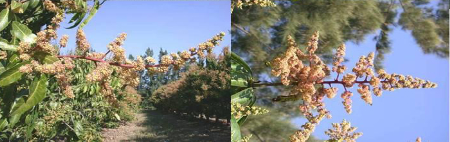
| Stage H: Full Flower |
 |
| Disease Spray – Program |
|---|
| Start with a Full Fruit Protection Spray Programme for the following diseases: |
|
| Insect Control Program |
|---|
|
| Pruning Program |
|---|
| Maintenance pruning and top working: |
|
| Sanitation |
|---|
|
| Fertilization |
|---|
|
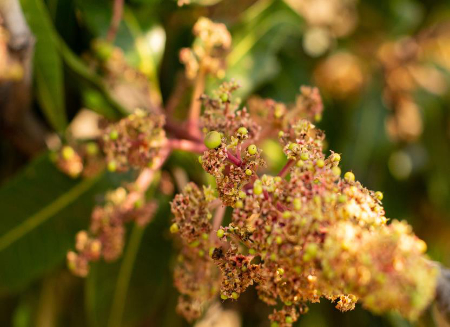
| Fruit Set |
|---|
 |
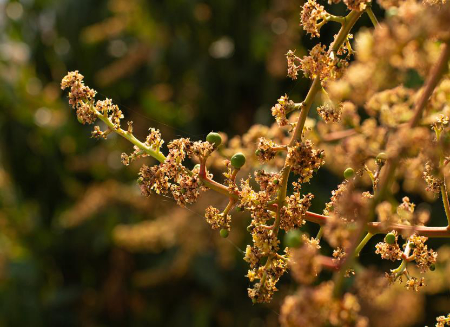
| Petal drop |
 |
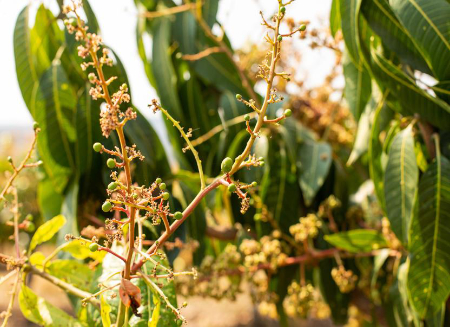
| Pea size |
 |
| Marble size |
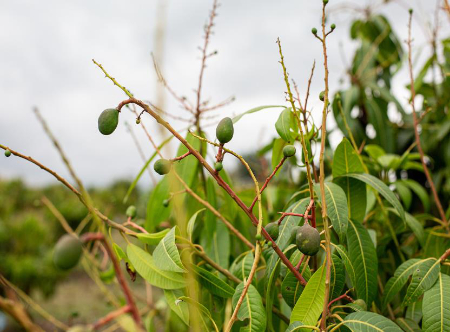 |
| Tennis ball size |
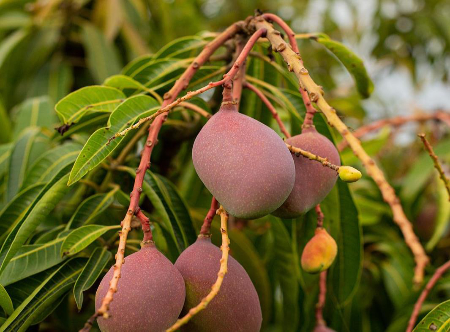 |
| Full size fruit |
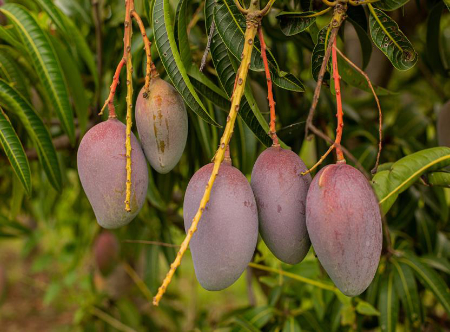 |
| Disease Spray – Program |
|---|
| Continue with a Full Fruit Protection Spray Programme for the following diseases: |
|
| Insect Control Program |
|---|
|
| Pruning Program |
|---|
| Maintenance pruning and top working: |
|
| Sanitation |
|---|
|
| Fertilization |
|---|
|
| Disease Spray – Program |
|---|
| Remove dead wood and flower panicles and protect new flush again infection. |
| Insect Control Program |
|---|
|
| Pruning Program |
|---|
| Maintenance pruning and top working: |
|
| Sanitation |
|---|
|
| Fertilization |
|---|
|